AI in Healthcare: Complete Beginner's Guide to Modern Medical Innovation
The healthcare industry stands at the precipice of a technological revolution that promises to fundamentally reshape how we diagnose, treat, and prevent disease. Artificial intelligence has emerged from research laboratories to become an integral component of modern medical practice, offering capabilities that extend far beyond human limitations in processing vast amounts of clinical data, identifying subtle patterns in diagnostic imaging, and predicting patient outcomes with unprecedented accuracy. For those new to this field, understanding the foundations of AI in Healthcare begins with recognizing that these technologies are not designed to replace medical professionals, but rather to augment their expertise and enable more precise, personalized care delivery.
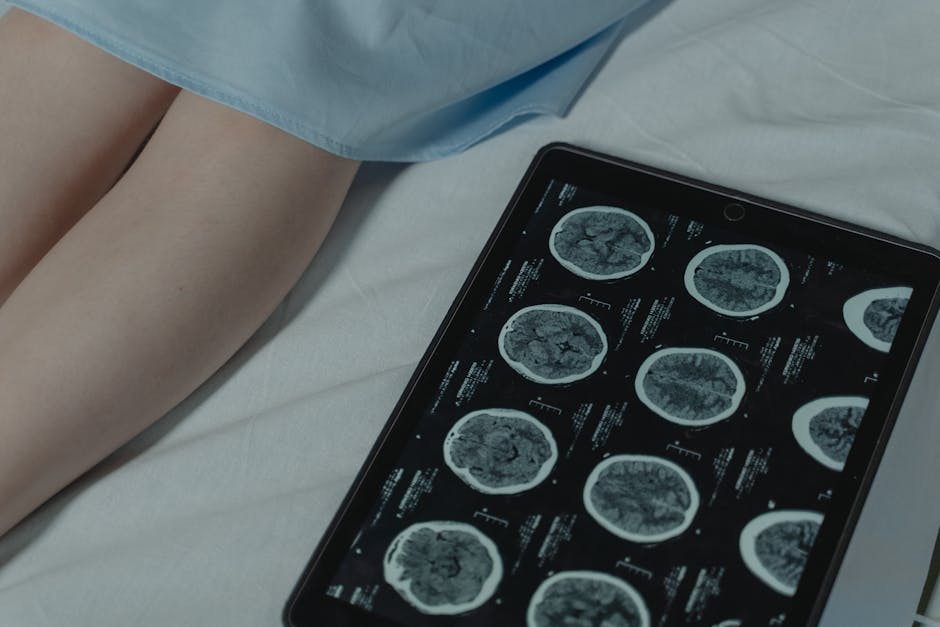
The transformation happening across hospitals, clinics, and research institutions worldwide represents more than incremental improvement—it signifies a paradigm shift in medical practice. AI in Healthcare encompasses a broad spectrum of applications, from machine learning algorithms that detect cancer in radiological scans to natural language processing systems that extract insights from electronic health records. These innovations address long-standing challenges in healthcare delivery, including diagnostic errors, treatment variability, administrative burden, and the growing shortage of specialized medical professionals in many regions.
Understanding the Fundamentals of AI in Healthcare
At its core, artificial intelligence in medical settings relies on algorithms trained to recognize patterns within clinical data. Unlike traditional software that follows explicit programming instructions, AI systems learn from examples, continuously improving their performance as they process more information. The most common AI approaches in healthcare include supervised learning, where algorithms learn from labeled datasets of patient outcomes; unsupervised learning, which identifies hidden patterns without predetermined categories; and reinforcement learning, where systems optimize treatment protocols through trial-and-error processes.
These technical foundations translate into practical applications that address real clinical needs. Medical AI Applications span diagnostic imaging analysis, where deep learning networks can identify pneumonia, fractures, or tumors with accuracy rivaling expert radiologists; predictive analytics that forecast patient deterioration hours before clinical symptoms manifest; and clinical decision support systems that recommend evidence-based treatments tailored to individual patient characteristics. The technology processes structured data from laboratory results and vital signs alongside unstructured information from physician notes and medical literature, creating comprehensive patient assessments that would be impossible for humans to compile manually.
Why AI in Healthcare Matters Now More Than Ever
The urgency driving AI adoption in medical settings stems from converging pressures that threaten healthcare system sustainability. Aging populations in developed nations are creating unprecedented demand for medical services while the supply of healthcare professionals grows inadequately to meet these needs. Medical knowledge doubles approximately every seventy-three days, making it humanly impossible for clinicians to stay current with all relevant research. Diagnostic errors affect an estimated twelve million Americans annually, many of which could be prevented through AI-assisted pattern recognition. Administrative tasks consume nearly half of physician working hours, contributing to widespread burnout and reducing time available for direct patient care.
Healthcare Technology powered by artificial intelligence offers viable solutions to these systemic challenges. AI diagnostic tools serve as a second opinion, catching abnormalities that might escape human attention during high-volume clinical workflows. Predictive algorithms identify high-risk patients who would benefit from preventive interventions, shifting healthcare from reactive treatment to proactive wellness management. Natural language processing automates documentation, allowing physicians to focus on patient interaction rather than data entry. These capabilities don't merely improve efficiency—they fundamentally enhance the quality and accessibility of medical care across diverse populations and geographic regions.
Core Application Areas for Beginners to Understand
Diagnostic Imaging and Pathology
Computer vision algorithms trained on millions of medical images can now detect diabetic retinopathy, classify skin lesions, identify fractures, and analyze pathology slides with performance matching or exceeding human specialists. These systems work by learning subtle visual patterns associated with different conditions, processing images in seconds and flagging cases requiring urgent attention. Radiologists and pathologists use AI as a diagnostic aid that highlights areas of concern and provides quantitative measurements, enhancing both accuracy and throughput without replacing clinical judgment.
Predictive Analytics and Risk Stratification
Machine learning models analyze patient histories, genetic profiles, environmental factors, and real-time clinical data to predict future health events. These predictions enable early interventions for patients at high risk of sepsis, readmission, deterioration, or medication complications. Hospitals deploy early warning systems that continuously monitor patient data, alerting clinicians when algorithms detect concerning patterns that may not yet be clinically obvious. This proactive approach transforms care delivery from reactive crisis management to anticipatory risk mitigation.
Drug Discovery and Development
AI in Healthcare accelerates pharmaceutical research by analyzing molecular structures, predicting drug-target interactions, and identifying promising compounds from vast chemical libraries. Traditional drug development requires ten to fifteen years and billions of dollars, with high failure rates. AI reduces this timeline by prioritizing the most promising candidates for experimental testing, repurposing existing medications for new indications, and designing molecules with specific therapeutic properties. Several AI-discovered drugs have entered clinical trials, demonstrating the technology's potential to address unmet medical needs more rapidly than conventional approaches.
Getting Started: Practical Steps for Healthcare Organizations
Organizations beginning their AI journey should start with clearly defined problems where data is abundant and clinical need is urgent. Successful implementations typically begin with narrow applications—such as predicting no-show appointments or optimizing operating room scheduling—before expanding to more complex clinical use cases. Establishing robust data infrastructure is essential, as AI systems require clean, standardized, comprehensive datasets for training and validation. This often necessitates investments in data governance, interoperability standards, and integration platforms that connect disparate clinical systems.
Building internal expertise represents another critical success factor. While many organizations partner with technology vendors for initial implementations, developing in-house understanding of AI capabilities, limitations, and ethical considerations ensures sustainable adoption. This includes training clinical staff to interpret AI recommendations appropriately, forming multidisciplinary teams that include clinicians, data scientists, and IT professionals, and establishing governance frameworks that address algorithmic transparency, bias detection, and patient privacy. Starting small, learning from pilot projects, and scaling based on demonstrated value creates a foundation for long-term transformation.
Navigating Challenges and Ethical Considerations
Despite tremendous promise, AI implementation in healthcare faces significant obstacles that beginners must understand. Data privacy regulations like HIPAA impose strict controls on patient information, requiring careful attention to security and consent processes. Algorithmic bias represents another serious concern, as AI systems trained on non-representative datasets may perform poorly for underserved populations, potentially exacerbating health disparities. Regulatory uncertainty around AI medical devices creates compliance challenges, particularly as algorithms continue learning and evolving after initial approval.
Beyond technical and regulatory hurdles, human factors significantly influence adoption success. Clinician skepticism about black-box algorithms that provide recommendations without transparent reasoning can impede implementation. Patients may have concerns about AI involvement in their care decisions, particularly regarding data usage and the role of human judgment. Addressing these challenges requires transparent communication about AI capabilities and limitations, involving end-users in design and deployment processes, and maintaining human oversight of algorithmic recommendations. Medical AI Applications succeed when they enhance rather than replace the patient-provider relationship.
The Future Landscape of AI-Enhanced Medicine
Looking ahead, AI in Healthcare will likely become increasingly personalized, moving beyond population-level insights to individualized predictions and treatments based on each patient's unique genetic, environmental, and lifestyle factors. Federated learning approaches will enable AI training across multiple institutions without sharing sensitive patient data, expanding dataset diversity while preserving privacy. Multimodal AI systems will integrate imaging, genomics, clinical notes, wearable sensor data, and social determinants of health into comprehensive patient models that guide prevention, diagnosis, and treatment across the care continuum.
The convergence of AI with other emerging technologies promises even more transformative possibilities. Robotics powered by AI assists in complex surgeries with superhuman precision. Virtual health assistants provide 24/7 patient support and monitoring. Generative AI creates synthetic medical data for research and training without privacy risks. As these technologies mature, the healthcare workforce will evolve, with clinicians focusing increasingly on complex decision-making, empathetic patient communication, and ethical oversight while AI handles routine analysis, documentation, and optimization tasks.
Conclusion
For beginners entering this dynamic field, the essential insight is that AI in Healthcare represents both tremendous opportunity and significant responsibility. The technology offers genuine potential to improve diagnostic accuracy, expand access to expertise, reduce costs, and personalize treatment in ways previously impossible. However, realizing this potential requires thoughtful implementation that prioritizes patient safety, addresses bias and equity concerns, maintains human judgment at the center of clinical decision-making, and builds trust among all stakeholders. Those willing to invest in understanding both the capabilities and limitations of these tools will be well-positioned to contribute to a healthcare future that is more effective, efficient, and equitable. As healthcare continues its digital transformation, professionals across all disciplines—from clinicians to administrators to policymakers—will benefit from foundational AI literacy. Interestingly, the principles and lessons learned from healthcare AI implementations are also informing technological advancement in other sectors, with AI Banking Solutions adapting similar pattern recognition and risk assessment methodologies to financial services, demonstrating how innovation in medical technology often catalyzes broader technological progress across industries.


Comments
Post a Comment