Critical Mistakes to Avoid When Implementing Production Line Automation
Manufacturing leaders today face mounting pressure to modernize their production facilities while maintaining uptime and quality standards. The promise of increased throughput, reduced cycle times, and lower operational costs drives many organizations toward automation, yet the path from legacy systems to fully integrated smart factories is fraught with preventable missteps. Understanding where implementation efforts commonly derail can mean the difference between a transformational success and a costly setback that erodes stakeholder confidence and delays competitive advantage.
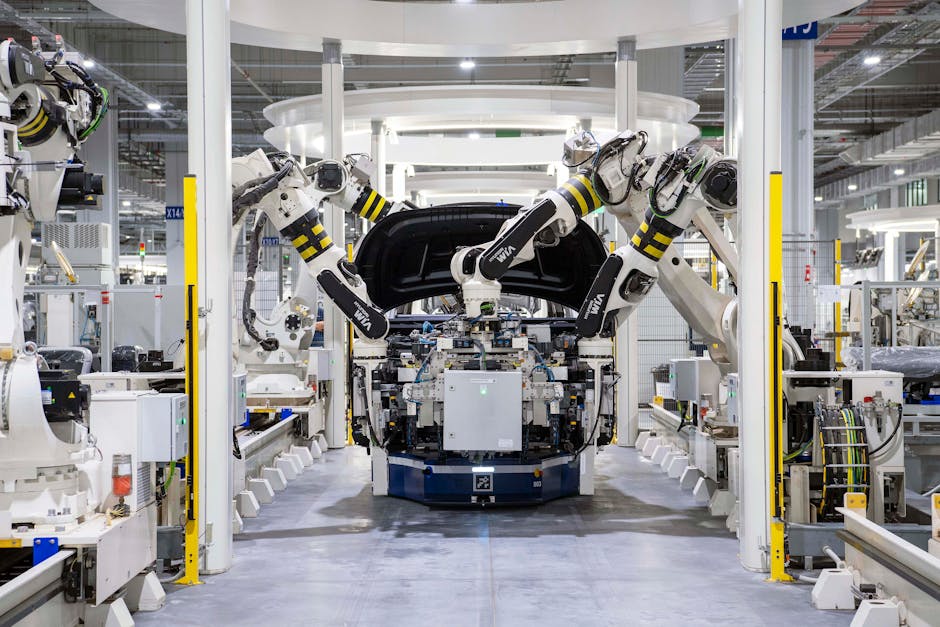
The journey toward Production Line Automation has become increasingly complex as manufacturers layer IIoT sensors, machine learning algorithms, and robotic process automation onto existing manufacturing execution systems. This complexity amplifies the consequences of planning oversights and implementation errors. Drawing from patterns observed across dozens of automation initiatives in facilities ranging from automotive assembly to pharmaceutical packaging, this analysis identifies the most damaging mistakes and provides actionable strategies to avoid them.
Mistake 1: Skipping the Production Readiness Assessment
Many manufacturers rush into automation purchases without conducting a thorough baseline assessment of their current production environment. This oversight typically stems from enthusiasm about new technology capabilities or pressure to match competitor announcements. The result is automation equipment that arrives on-site only to reveal incompatibilities with existing infrastructure, floor space constraints, or power supply limitations that should have been identified months earlier.
A proper readiness assessment examines current OEE metrics across all production lines, identifies bottlenecks through process mining techniques, and documents the actual condition of legacy equipment that will interface with new systems. For example, installing state-of-the-art robotic arms on an assembly line fed by aging conveyor systems with inconsistent positioning accuracy creates a mismatch that undermines the entire investment. The assessment phase should also include a candid evaluation of data infrastructure, network latency, and cybersecurity posture since modern automation systems depend on reliable, secure data flows to function effectively.
To avoid this mistake, dedicate at least 8-12 weeks to comprehensive facility auditing before issuing purchase orders. Engage cross-functional teams including production engineers, IT infrastructure specialists, and quality assurance personnel. Document current cycle times, defect rates, changeover durations, and maintenance frequencies with precision. This baseline data becomes essential for measuring ROI after implementation and for making informed decisions about which production lines offer the highest automation potential.
Mistake 2: Underestimating Integration Complexity
Production Line Automation rarely involves standalone systems. Modern smart factory integration requires seamless communication between robotic cells, conveyor controls, quality inspection cameras, inventory management systems, and enterprise resource planning platforms. Manufacturers frequently underestimate the engineering effort required to achieve this integration, assuming that vendors will handle connectivity as part of standard installation.
The reality involves extensive protocol translation, custom middleware development, and iterative testing to ensure data flows correctly across systems from different manufacturers. When a Fanuc robot needs to coordinate with a Siemens PLC while reporting status to a Rockwell FactoryTalk system, the integration layer becomes a significant project component. Organizations that fail to budget adequate time and specialized talent for this work end up with automation islands that cannot share data or coordinate actions, eliminating many anticipated efficiency gains.
Successful approaches treat integration as a distinct project workstream with dedicated resources. Specify communication protocols and data formats in vendor contracts before purchase. Allocate 30-40% of your project timeline specifically to integration activities, testing, and troubleshooting. Consider bringing in systems integrators with proven experience connecting the specific equipment brands in your facility, as their pattern libraries and pre-built connectors can compress timelines significantly.
Mistake 3: Neglecting Workforce Training and Change Management
Even the most technically flawless automation implementation fails if the production workforce cannot operate, troubleshoot, and optimize the new systems. Manufacturers commonly treat training as an afterthought, scheduling a few hours of vendor instruction immediately before go-live. This approach leaves operators uncertain, maintenance teams unprepared for new failure modes, and supervisors unable to interpret the real-time dashboards that should inform their decisions.
The shift from manual or semi-automated processes to advanced robotics and predictive maintenance systems represents a fundamental change in daily work patterns. Operators who previously relied on sensory cues like sound and vibration to assess machine health must now trust sensor data and respond to digital alerts. Maintenance personnel accustomed to reactive repairs need training in condition-based monitoring and scheduled interventions triggered by machine learning algorithms. Without structured change management, resistance emerges and productivity suffers during the critical ramp-up period.
Organizations seeking to implement sophisticated automation increasingly turn to AI-driven solutions that require entirely new skillsets among production teams. Addressing this requires a training program that begins months before equipment installation and continues through the first year of operation. Develop role-specific curricula for operators, maintenance technicians, quality inspectors, and production supervisors. Include hands-on simulation time, vendor-led certification programs, and mentorship pairings between early adopters and skeptics. Budget 15-20% of the total project cost for training and change management activities, recognizing that human capability development often determines whether automation investments deliver their projected returns.
Mistake 4: Ignoring Data Infrastructure Requirements
Modern Production Line Automation generates massive data volumes from smart sensors, vision systems, and process monitors. A single robotic welding cell might produce thousands of data points per minute covering temperature, position, force, cycle time, and quality parameters. Multiplied across an entire facility, this creates data infrastructure demands that overwhelm systems designed for traditional manufacturing execution.
Manufacturers commonly discover these limitations only after automation systems are operational, when network congestion slows communication, historians fail to capture critical events, or analytics platforms cannot process the data volumes required for meaningful insights. The resulting gaps prevent realizing the full value of predictive maintenance algorithms, real-time quality control adjustments, and production optimization that justify automation investments.
Preventing this mistake requires evaluating and upgrading data infrastructure in parallel with automation planning. Assess network bandwidth, edge computing capacity, data storage architecture, and analytics platform scalability. Modern approaches often implement edge processing to filter and aggregate sensor data locally before transmitting summaries to central systems, dramatically reducing bandwidth requirements. Plan for data volumes 10-15 times higher than initial calculations suggest, as successful automation programs typically expand to additional production lines once benefits become apparent.
Mistake 5: Overlooking Scalability and Future-Proofing
Automation decisions made to solve immediate production bottlenecks often create limitations that become apparent as business needs evolve. Manufacturers select equipment sized precisely for current volumes, choose proprietary systems that lock them into single vendors, or implement custom solutions that cannot accommodate new product variants without expensive re-engineering. These choices feel prudent when budgets are constrained, but they impose hidden costs that compound over subsequent years.
The rapid pace of advancement in robotic process automation, machine vision, and digital twin modeling means that systems installed today will coexist with significantly more capable technologies within 3-5 years. Automation architectures that cannot integrate these future capabilities force manufacturers into premature replacement cycles or prevent them from adopting innovations that competitors leverage for advantage. Similarly, production lines optimized for a narrow product range struggle when market demands shift toward customization and shorter runs.
Building in scalability requires modular system design, open communication protocols, and capacity headroom. Specify equipment rated for 150% of current production volumes to accommodate growth without immediate replacement. Favor systems based on industry standards like OPC UA, MQTT, and PackML that facilitate integration with diverse equipment. Design cell layouts and material handling systems that can be reconfigured for different product families. While these approaches increase initial investment by 15-25%, they extend useful system life and reduce total cost of ownership across a realistic 10-15 year horizon.
Conclusion
The manufacturers achieving the most impressive results from Production Line Automation share a common pattern: they treat implementation as a systematic transformation program rather than an equipment purchase. They invest time in thorough assessments, allocate resources to integration and training, build robust data foundations, and design for adaptability. These practices do extend project timelines and increase upfront costs, but they dramatically improve the probability of achieving projected ROI while positioning facilities to leverage continuous improvement and emerging technologies. For organizations ready to pursue automation with realistic expectations and comprehensive planning, partnering with experienced Automation Integration Services can provide the specialized expertise needed to navigate complexity, avoid common pitfalls, and accelerate the path to measurable production gains.


Comments
Post a Comment