Generative AI Deployment Success: A Precision Manufacturing Case Study
When a leading precision components manufacturer faced declining competitiveness due to rising operational costs and quality inconsistencies, they embarked on an ambitious Generative AI Deployment initiative that would ultimately transform their operations. This detailed case study examines their eighteen-month journey from concept to full-scale implementation, revealing the strategic decisions, technical approaches, and organizational changes that enabled them to achieve remarkable results: 34% reduction in unplanned downtime, 27% improvement in first-pass yield, and $18.7 million in annual cost savings across their three North American facilities.
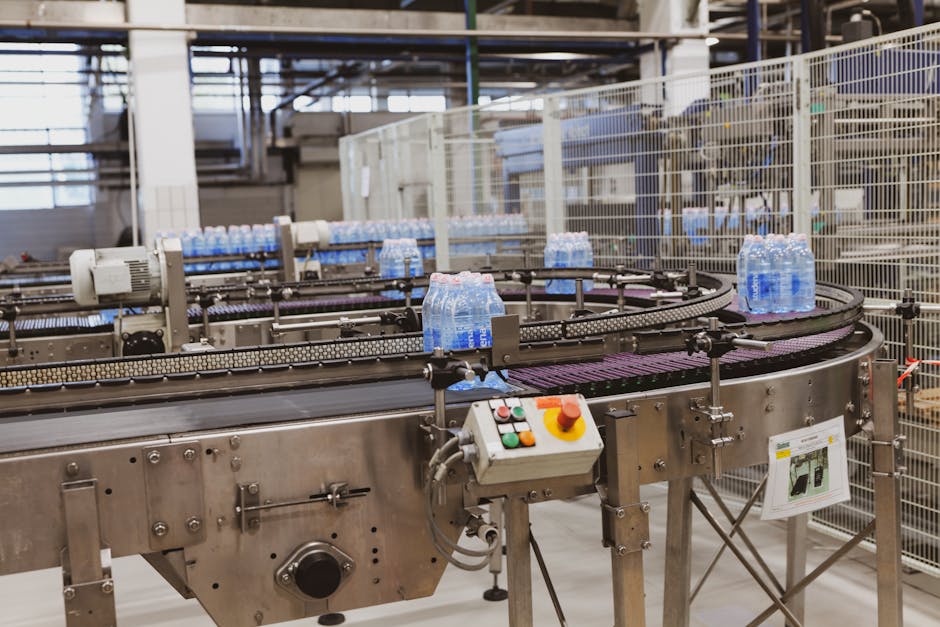
The company, which we'll call PrecisionTech (name changed for confidentiality), manufactures high-tolerance aerospace and medical device components requiring extreme precision and rigorous quality standards. By 2024, they confronted mounting challenges that threatened their market position. Equipment failures were increasing as their machinery aged, with MTBF declining by 22% over three years. Quality control detected defects too late in production processes, resulting in expensive scrap and rework. Supply chain disruptions created material shortages that idled production lines. Their existing MES and ERP systems captured operational data but provided limited analytical capabilities, leaving process engineers to rely on experience and intuition rather than data-driven insights. Leadership recognized that incremental improvements wouldn't suffice—they needed transformative change through Generative AI Deployment across their most critical operations.
Phase 1: Strategic Assessment and Use Case Selection
PrecisionTech began by assembling a cross-functional team including their VP of Operations, IT Director, Chief Quality Officer, and representatives from production, maintenance, and supply chain functions. They engaged an external AI consulting partner with deep manufacturing domain expertise to help assess opportunities and develop a roadmap. Rather than pursuing AI broadly, they conducted a systematic evaluation of potential use cases against three criteria: business impact, technical feasibility, and organizational readiness.
After eight weeks of analysis, they prioritized three interconnected applications for their initial deployment. First, generative models for predictive maintenance that could forecast equipment failures and optimize maintenance scheduling to minimize disruption. Second, AI-driven quality prediction that could identify defect risks early in production processes, enabling real-time adjustments before defects occurred. Third, Supply Chain Optimization algorithms that could simulate disruption scenarios and recommend inventory positioning and supplier allocation strategies to maintain production continuity. These use cases shared common data sources and complementary objectives, creating synergies that would amplify their combined impact.
Building the Business Case
The team developed detailed financial models projecting the ROI for each application. For predictive maintenance, they estimated that reducing unplanned downtime by 25% would save $6.2 million annually through increased production time, reduced emergency maintenance costs, and elimination of rush parts procurement. For quality prediction, improving first-pass yield by 20% would save $4.8 million through reduced scrap, rework labor, and warranty claims. For supply chain optimization, reducing inventory levels by 15% while improving material availability would free up $3.1 million in working capital and prevent $4.6 million in lost production from stockouts. Combined, the business case projected $18.7 million in annual benefits against a total investment of $8.4 million over eighteen months—a compelling 2.2:1 first-year return.
Phase 2: Data Infrastructure and Model Development
PrecisionTech quickly discovered that their existing data infrastructure couldn't support advanced analytics. Their three facilities used different MES platforms with inconsistent data models. Equipment sensors produced valuable telemetry but stored it in isolated databases with limited retention. Quality inspection data existed primarily in paper records and disconnected spreadsheets. Supply chain information resided in their ERP but lacked the granularity needed for sophisticated analysis. Before building AI models, they needed to unify and enhance their data foundations.
Over four months, they implemented a centralized Manufacturing Analytics platform that integrated data from all major systems. They deployed IoT sensors on 147 critical machines, capturing vibration, temperature, pressure, and acoustic signatures at one-second intervals. They digitized quality inspection processes, implementing tablet-based data collection that captured measurements with precise timestamps and traceability to specific production batches. They enhanced their ERP integration to capture supplier performance metrics, material characteristics, and detailed inventory movements. This data infrastructure investment totaled $2.8 million but created capabilities that would support not just their initial AI applications but future analytics initiatives across the organization.
Model Training and Validation
With data flowing reliably, PrecisionTech's AI partner began developing generative models tailored to their specific operational context. For predictive maintenance, they trained models on eighteen months of historical equipment telemetry, maintenance records, and failure events. The models learned to recognize subtle patterns that preceded failures—not just obvious indicators like rising vibration, but complex multivariate signatures that emerged weeks before breakdowns. They incorporated domain knowledge from experienced maintenance technicians, encoding insights about failure modes, degradation patterns, and environmental factors that purely data-driven approaches might miss.
For quality prediction, they developed models that analyzed real-time process parameters—temperatures, pressures, speeds, tool wear indicators—alongside material batch characteristics to predict defect risks before inspection. They trained these models on two years of production data, correlating process conditions with ultimate quality outcomes. For AI solution development in supply chain optimization, they created simulation models that could generate thousands of scenarios reflecting different disruption patterns, then identify robust inventory and sourcing strategies that performed well across diverse conditions. Each model underwent rigorous validation using held-out test data, ensuring predictions would generalize to future conditions rather than simply memorizing historical patterns.
Phase 3: Pilot Deployment and Organizational Change
PrecisionTech wisely chose to pilot their Generative AI Deployment at a single facility before enterprise-wide rollout. They selected their Phoenix operation, their most digitally mature site with a leadership team eager to embrace innovation. The pilot began with predictive maintenance on a production line containing twelve CNC machines critical to their highest-volume product family. Rather than fully automating maintenance decisions, they implemented a human-in-the-loop approach where AI predictions generated recommendations that maintenance planners reviewed and approved.
Initial results proved encouraging but highlighted important lessons. The models accurately predicted 78% of failures that occurred during the three-month pilot, typically providing seven to fourteen days advance warning. This enabled planners to schedule maintenance during planned downtime, coordinate parts procurement, and prepare technicians—avoiding the chaos and costs of emergency repairs. However, the models also generated false alarms for failures that never materialized, initially frustrating maintenance staff who felt their time was wasted investigating phantom problems. The team addressed this through model refinement, adjusting confidence thresholds to reduce false positives, and through communication—helping staff understand that some false alarms were acceptable given the far greater costs of missed predictions.
Expanding Across Use Cases
As predictive maintenance demonstrated value, PrecisionTech activated quality prediction capabilities. The system monitored real-time process parameters and alerted operators when conditions indicated elevated defect risks. Operators could then make immediate adjustments—modifying speeds, checking tool condition, or flagging parts for additional inspection—before producing defective components. This required significant operator training and workflow changes. Production staff accustomed to running equipment at set parameters needed to become active problem-solvers who interpreted AI insights and took corrective actions. The transition proved challenging, with some operators initially dismissing alerts as unnecessary interruptions.
PrecisionTech invested heavily in change management to address resistance. They identified respected operators to serve as AI champions who received advanced training and helped their peers adapt. They redesigned performance metrics to reward quality improvements rather than just throughput, aligning incentives with AI-enabled workflows. They implemented feedback mechanisms where operators could flag incorrect predictions, creating training data that improved model accuracy while giving staff agency in the system's evolution. Within six months, operator acceptance reached 87% according to internal surveys, with many staff reporting that AI assistance made their work less stressful by helping them avoid quality problems rather than just reacting to them.
Phase 4: Enterprise Scaling and Integration
The Phoenix pilot's success—31% reduction in unplanned downtime and 24% improvement in first-pass yield—convinced leadership to proceed with enterprise deployment. However, scaling from one facility to three presented new challenges. Their Cincinnati and Dallas facilities operated different equipment types, manufactured different product mixes, and had distinct operational cultures. Simply copying Phoenix's models wouldn't work; they needed approaches that could adapt to local contexts while maintaining consistent architectural foundations.
PrecisionTech developed a hybrid model where core AI architectures and data infrastructure remained standardized across facilities, but model training incorporated site-specific data reflecting local equipment, processes, and products. They established a centralized AI operations team responsible for maintaining shared infrastructure and algorithms while embedding AI specialists at each facility to manage local customization and support operational integration. This structure balanced efficiency gains from standardization with flexibility to address site-specific requirements.
Integration with existing manufacturing systems proved critical during scaling. They built direct API connections between their AI platform and their MES, enabling predictive maintenance recommendations to automatically generate work orders, allocate parts from inventory, and update production schedules to accommodate planned downtime. Quality predictions triggered real-time alerts in operator interfaces and updated statistical process control dashboards that quality engineers monitored. Supply chain models fed recommendations directly into their ERP's planning modules, influencing purchasing decisions and inventory allocations without requiring manual data transfer. These integrations transformed AI from analytical tools into embedded operational capabilities that shaped daily decisions across the enterprise.
Phase 5: Results, Lessons, and Continuous Improvement
After eighteen months, PrecisionTech's Generative AI Deployment had achieved results that exceeded their initial business case projections. Unplanned downtime decreased by 34% as predictive maintenance enabled proactive intervention before failures occurred. First-pass yield improved by 27% as quality prediction prevented defects rather than just detecting them. Supply chain optimization reduced inventory levels by 17% while simultaneously improving material availability to 98.3%, preventing $5.4 million in lost production from stockouts. OEE across their enterprise increased from 72% to 83%, a transformative improvement that enhanced competitiveness and enabled them to take on new business without capital investment in additional equipment.
Financial returns exceeded projections as well. The initiative delivered $21.3 million in annual benefits against their $8.4 million total investment, achieving a 2.5:1 first-year return. More importantly, these capabilities positioned PrecisionTech for sustained competitive advantage. Their ability to maintain higher equipment uptime, produce higher quality products, and navigate supply chain disruptions more effectively than competitors created tangible market differentiation that strengthened customer relationships and enabled premium pricing for critical components.
Critical Success Factors and Lessons Learned
PrecisionTech's leadership identified several factors that proved critical to their success. First, they invested in data infrastructure before attempting advanced AI applications, recognizing that model quality depends fundamentally on data quality. Second, they prioritized organizational change management as highly as technical implementation, understanding that AI succeeds or fails based on human adoption. Third, they took an iterative approach, starting with focused pilots that demonstrated value and built capability before scaling enterprise-wide. Fourth, they maintained strong executive sponsorship throughout the initiative, ensuring adequate resources and organizational alignment even when challenges emerged.
They also identified important lessons from difficulties encountered. Their initial timeline proved optimistic; data infrastructure work took 40% longer than planned as they discovered unexpected integration complexities. Model accuracy in early deployments fell short of expectations until they incorporated more domain expertise from operations staff—a reminder that manufacturing AI requires both data science and process knowledge. Organizational resistance proved more significant than anticipated, requiring sustained change management investment beyond their original plans. And they underestimated the ongoing operational burden of model maintenance, ultimately establishing a dedicated AI operations team they hadn't initially budgeted for.
Conclusion: Blueprint for Manufacturing AI Transformation
PrecisionTech's experience offers a detailed blueprint for manufacturers pursuing Generative AI Deployment at enterprise scale. Success requires comprehensive data infrastructure that integrates information across operational systems. It demands AI solutions customized to specific manufacturing contexts rather than generic models. It necessitates deep organizational change management that helps staff adapt to AI-augmented workflows. It involves systematic scaling approaches that balance standardization with local flexibility. And it requires sustained operational commitment to model maintenance and continuous improvement.
The case also demonstrates that ambitious returns are achievable when AI initiatives align with genuine business needs and receive appropriate investment. PrecisionTech's 34% downtime reduction, 27% yield improvement, and $21.3 million annual benefit didn't result from AI magic—they came from systematic application of generative models to well-defined problems, supported by robust data, integrated into operational workflows, and adopted by engaged staff. As manufacturers across sectors pursue similar transformations, frameworks like Predictive Maintenance AI provide proven starting points that deliver measurable value while building capabilities for broader AI adoption. PrecisionTech's journey from struggling with equipment failures and quality problems to operating at world-class performance levels illustrates the transformative potential available to manufacturers who approach Generative AI Deployment with appropriate strategy, investment, and commitment.


Comments
Post a Comment