AI-Driven Development Case Study: How a Global ERP Provider Cut Release Cycles by 47%
When a Fortune 500 Enterprise Resource Planning provider serving manufacturing clients across North America and Europe faced mounting pressure to accelerate feature delivery while maintaining the stability their customers demanded, the organization's engineering leadership recognized that incremental process improvements would not bridge the gap between market expectations and development capacity. With a legacy codebase spanning 15 million lines of code across multiple technology stacks, a distributed development team of 850 engineers, and customer contracts requiring 99.9% uptime guarantees, the company needed a transformation approach that could deliver measurable velocity gains without compromising the quality standards that defined their competitive position in the Enterprise Software Solutions market.
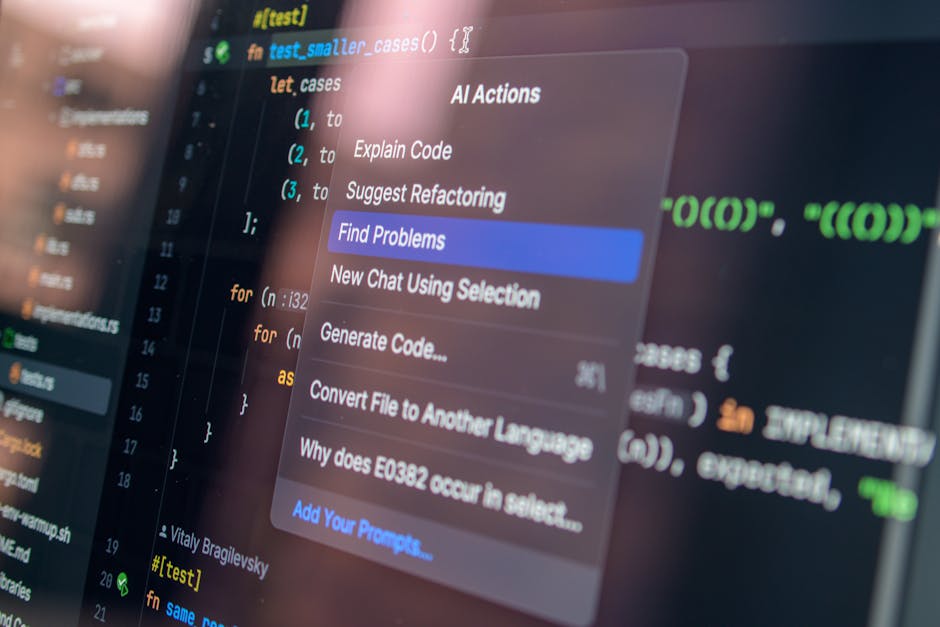
The resulting initiative to implement AI-Driven Development across their Software Development Lifecycle Management process provides valuable insights into both the opportunities and challenges organizations face when integrating artificial intelligence into established enterprise development workflows. Over an 18-month implementation period, the company documented detailed metrics covering developer productivity, code quality, deployment frequency, and operational stability that reveal the nuanced reality of AI-Driven Development adoption beyond vendor claims and theoretical benefits. The specifics of their journey, including the obstacles encountered and the architectural decisions that ultimately determined success, offer a roadmap for other enterprise software organizations contemplating similar transformations.
The Baseline: Understanding the Pre-AI Development Environment
Before implementing any AI capabilities, the organization conducted a comprehensive baseline assessment of their development performance across key dimensions. The ERP platform supported complex Supply Chain Management and Financial Management modules that required deep integration with customer systems, creating development complexity that manifested in extended delivery timelines and resource-intensive quality assurance processes.
Average development cycle time from requirement specification to production deployment measured 127 days for medium-complexity features, with approximately 35% of that time consumed by manual code writing, 25% by integration testing across modules, 20% by code review and security validation, and the remaining 20% distributed across planning, deployment preparation, and post-deployment monitoring. The development team maintained an average defect density of 2.3 defects per thousand lines of code, which while acceptable for enterprise software, still generated significant customer support overhead and emergency patch cycles.
Developer productivity metrics revealed that senior engineers spent approximately 40% of their time on routine coding tasks that required deep knowledge of the existing codebase but limited creative problem-solving, including data access layer implementations, API endpoint creation following established patterns, and user interface components that replicated existing functionality with minor variations. Code review backlogs averaged 4.2 days, creating bottlenecks that delayed feature completion and frustrated development teams waiting for approval to proceed.
The Continuous Integration/Continuous Deployment pipeline processed approximately 280 builds per week across all development teams, with a 73% first-pass success rate and average build-to-deployment cycle time of 6.8 hours for successful builds. These baseline metrics established the quantitative foundation against which AI-Driven Development impact would be measured throughout the implementation.
Architecture Design: Building the AI-Driven Development Infrastructure
Rather than simply providing developers with generic AI coding assistants, the engineering leadership designed a comprehensive AI-Driven Development architecture that integrated with existing development infrastructure while addressing the specific requirements of enterprise software development. The architecture centered on three core components: an enterprise Knowledge Graph encoding system architecture and approved patterns, a private deployment of large language models fine-tuned on the organization's codebase, and enhanced DevOps pipelines with AI-specific quality gates.
The Knowledge Graph initiative required six months of dedicated effort from a team of solution architects and data engineers who analyzed the existing codebase to extract architectural patterns, data models, integration contracts, and business logic relationships. The resulting graph database contained approximately 2.8 million nodes representing code components, design patterns, system dependencies, and business rules, with 7.3 million edges encoding the relationships between these entities. This Knowledge Graph served as the contextual foundation that enabled AI models to generate code suggestions aligned with enterprise architecture standards rather than generic solutions.
For the AI model deployment, security and intellectual property concerns led to rejecting public cloud AI services in favor of a private deployment using open-source large language models fine-tuned on the company's proprietary codebase. The infrastructure team provisioned dedicated GPU clusters and implemented enterprise AI development platforms that supported model versioning, prompt management, and performance monitoring. Fine-tuning the base models on approximately 12 million lines of internal code improved suggestion relevance by 340% compared to generic models, as measured by developer acceptance rates.
The enhanced CI/CD pipeline incorporated AI-specific validation stages including automated detection of AI hallucinations, verification that generated code adhered to data governance policies, security scanning calibrated for AI-generated patterns, and performance testing that flagged inefficient algorithms sometimes suggested by AI models. These quality gates addressed the unique risks associated with AI-generated code while maintaining the rapid feedback cycles developers expected from modern DevOps practices.
Phased Rollout: Lessons from Pilot Through Enterprise-Wide Adoption
The implementation followed a deliberate three-phase rollout strategy beginning with a volunteer pilot cohort, expanding to business unit-wide deployment, and culminating in enterprise-wide availability. The pilot phase engaged 45 developers working on a new cloud native application module, deliberately choosing a greenfield project that avoided the complexity of legacy system integration while allowing the team to refine AI-Driven Development practices in a controlled environment.
Pilot phase results proved encouraging but revealed critical implementation gaps. Developer productivity, measured by story points completed per sprint, increased by 28% compared to pre-AI baselines, while code review cycle time decreased by 35% as AI-generated code followed established patterns more consistently than human-written code. However, the pilot also surfaced challenges including AI model suggestions that ignored enterprise security policies around data encryption, generated test cases with insufficient edge case coverage, and occasionally recommended deprecated libraries that remained in the training dataset but had been superseded by approved alternatives.
These findings drove significant refinement before the second phase deployment to 320 developers across the Supply Chain Management business unit. The team enhanced the Knowledge Graph to encode security policies explicitly, implemented automated scanning that flagged deprecated library references, and developed prompt engineering templates that guided developers toward security-aware AI interactions. Additionally, the organization established a dedicated MLOps team responsible for monitoring AI model performance, collecting developer feedback on suggestion quality, and managing the continuous improvement cycle for the AI infrastructure.
Phase two deployment achieved sustained productivity gains of 34% while reducing defect density to 1.7 defects per thousand lines of code, representing a 26% improvement in code quality. Interestingly, the quality improvement resulted not from AI generating better code than humans, but from AI handling routine implementations consistently while freeing senior developers to focus on complex architectural decisions and edge case handling where human judgment proved superior. This complementary relationship between AI consistency and human creativity became a central theme in the organization's AI-Driven Development training programs.
Quantified Outcomes: The 18-Month Results
Following enterprise-wide deployment in month 12, the organization tracked outcomes through month 18 to measure sustained impact beyond initial adoption enthusiasm. The headline metric of 47% reduction in release cycle time reflected cumulative improvements across the development lifecycle rather than isolated gains in code generation speed. Decomposing this improvement revealed that AI-Driven Development contributed 19% reduction through faster code implementation, 12% through accelerated code review enabled by more consistent code patterns, 8% through reduced defect remediation cycles, and 8% through improved API integration code that reduced integration testing time.
Developer productivity metrics showed sustained increases of 38% in story points delivered per sprint, with interesting variations across experience levels. Contrary to initial concerns that AI would primarily benefit junior developers, senior engineers with 10+ years of experience demonstrated the highest productivity gains at 43%, as they proved most effective at crafting prompts that leveraged the Knowledge Graph context and critically evaluating AI suggestions. Mid-level developers achieved 36% gains, while junior developers with less than 2 years of experience showed only 21% improvements, suggesting that effective AI utilization required substantial domain knowledge to formulate appropriate requests and validate suggestions.
Code quality metrics revealed nuanced impacts that challenged simplistic assumptions about AI-generated code quality. Overall defect density improved 31% to 1.59 defects per thousand lines of code, but analysis by defect category showed AI-generated code had 58% fewer simple logic errors and 41% fewer null reference exceptions while showing 15% higher rates of subtle concurrency issues and edge case handling gaps. This pattern reinforced the importance of human code review focused on AI-specific weakness patterns rather than assuming AI-generated code required less scrutiny than human-written code.
The CI/CD pipeline processed 67% more builds per week at 469 builds, reflecting both increased development velocity and more granular commit practices enabled by AI assistance with routine refactoring and code cleanup. First-pass build success rates improved to 81%, while build-to-deployment cycle time decreased to 4.3 hours, indicating that AI-generated code integrated more smoothly with existing systems when supported by adequate Knowledge Graph context.
Cultural Impact and Change Management Insights
Beyond quantitative metrics, the implementation surfaced important insights about organizational change management and developer culture evolution. Initial developer sentiment surveys revealed significant skepticism, with only 42% of developers expressing positive views about AI-Driven Development prior to implementation. Concerns centered on job security, AI replacing creative aspects of development work, and frustration with AI tools that generated low-quality suggestions.
The organization addressed these concerns through transparent communication emphasizing AI as augmentation rather than replacement, showcase sessions where developers shared successful AI utilization patterns, and career development programs that valued both AI-enhanced productivity and deep domain expertise. By month 18, developer sentiment surveys showed 78% positive views, with qualitative feedback highlighting appreciation for AI handling tedious implementation work and enabling focus on architectural challenges and complex problem-solving.
The most significant cultural shift involved reconceptualizing the developer role from code author to code curator and architect. Developers increasingly spent time designing prompts that communicated intent to AI systems, reviewing and refining AI-generated implementations, and making architectural decisions that AI tools supported but did not replace. This evolution required new skills in prompt engineering, AI output validation, and critical evaluation of algorithmically-generated solutions, leading to updated interview processes and training curricula that balanced traditional software engineering fundamentals with AI collaboration capabilities.
Critical Success Factors and Implementation Lessons
Analyzing the implementation journey revealed several critical success factors that differentiated this effort from less successful AI-Driven Development initiatives observed across the Enterprise Software Solutions industry. The most important factor proved to be the substantial investment in Knowledge Graphs that provided enterprise context, transforming generic AI coding assistants into enterprise-aware development partners. Organizations that deployed AI tools without this contextual foundation reported marginal productivity gains and high developer frustration with irrelevant suggestions.
Second, treating AI-Driven Development as an architecture and process transformation rather than a tool deployment proved essential. The enhanced CI/CD pipelines, AI-specific code review practices, and MLOps governance created the quality and security framework necessary for enterprise software development. Organizations that framed AI adoption purely as developer productivity tooling encountered quality and security issues that undermined stakeholder confidence.
Third, the private model deployment addressing security and intellectual property concerns enabled unrestricted access to AI capabilities across the development organization. Companies that relied on public cloud AI services faced developer frustration with security-driven access restrictions that limited AI utility for the most sensitive and valuable portions of the codebase. While private deployment required significant infrastructure investment, the organization calculated positive ROI within 14 months based on productivity gains and avoided security risks.
Fourth, the phased rollout with dedicated refinement cycles between phases allowed the organization to address implementation gaps before they affected the broader development organization. The pilot phase surfaced critical issues around security policy adherence, deprecated library recommendations, and test coverage that would have undermined enterprise deployment if not addressed through Knowledge Graph enhancement and quality gate implementation.
Conclusion: The Future of Enterprise AI-Driven Development
This detailed case study demonstrates that AI-Driven Development delivers measurable value in enterprise environments when implemented with appropriate architecture, governance, and change management rather than deployed as isolated developer tools. The 47% reduction in release cycle time, 38% improvement in developer productivity, and 31% decrease in defect density represent substantive outcomes that justify the significant implementation investment required to build Knowledge Graphs, deploy private AI infrastructure, and enhance DevOps pipelines with AI-specific quality gates. Perhaps more importantly, the qualitative shifts in developer roles toward architecture and curation rather than routine implementation suggest that AI-Driven Development represents a fundamental evolution in how Enterprise Software Solutions get built rather than an incremental process improvement. As the organization continues refining its AI capabilities, leadership has begun exploring next-generation applications including Autonomous AI Agents that promise to extend AI capabilities beyond code generation into requirements analysis, architecture design, and automated testing, potentially delivering another step-function improvement in how quickly and reliably enterprises can deliver the software innovations their markets demand.


Comments
Post a Comment