Procure-to-Pay Automation Case Study: 60% Cycle Time Reduction at Global Manufacturer
A global industrial equipment manufacturer with operations across 23 countries and annual procurement spend exceeding $2.8 billion faced mounting pressure to reduce costs, improve working capital management, and gain visibility into a fragmented supply base. Their legacy procurement processes relied heavily on email-based requisitions, manual three-way matching in accounts payable, decentralized supplier management, and disconnected systems that made spend analysis nearly impossible. Purchase order cycle times averaged 12 days, invoice processing cost $18 per transaction, and maverick spend—purchases made outside established contracts and preferred suppliers—exceeded 35% of total spend. Leadership recognized that incremental improvements would not suffice; they needed a comprehensive transformation of their Procure-to-Pay processes through enterprise-wide automation.
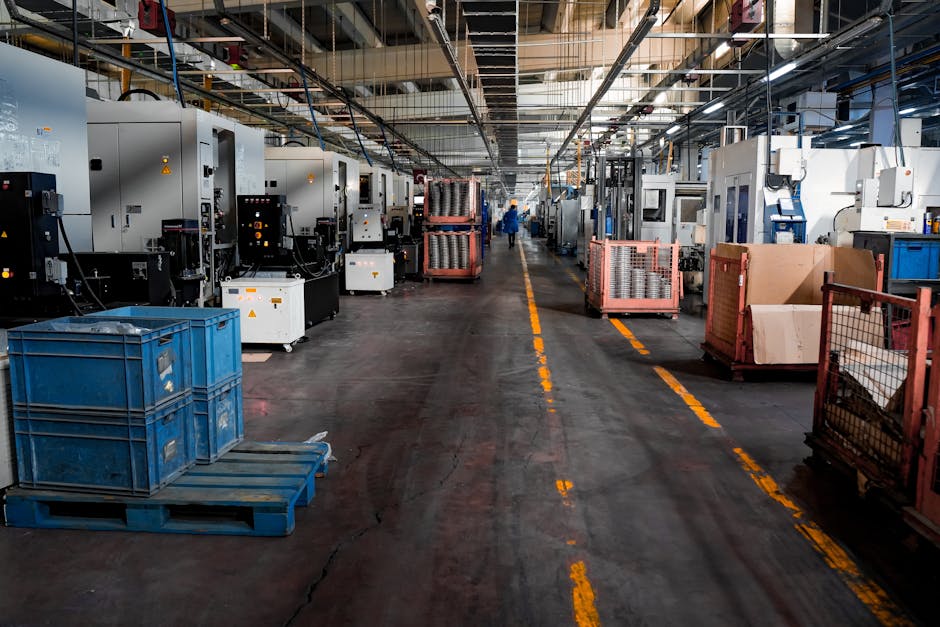
This case study examines how the manufacturer implemented Procure-to-Pay Automation across their global operations, achieving remarkable results: 60% reduction in requisition-to-PO cycle time, 42% decrease in invoice processing costs, 28% reduction in maverick spend, and improved supplier satisfaction scores. The journey required 18 months of intensive effort, significant change management investment, and the resolution of complex technical and organizational challenges. By detailing the strategy, implementation approach, results, and lessons learned, this case provides a roadmap for procurement leaders navigating similar transformations at large, complex enterprises.
Company Background and Initial Challenges
The manufacturer operated through multiple business units with considerable autonomy, resulting in inconsistent procurement practices and technology platforms. Some facilities used local ERP instances with basic purchasing modules, others relied on spreadsheets and email, and there was no centralized contract repository or unified supplier master database. This fragmentation created several critical problems. First, the lack of spend visibility prevented category managers from negotiating volume discounts or identifying consolidation opportunities—the company was essentially operating as dozens of small buyers rather than leveraging its scale. Second, manual approval routing caused delays and bottlenecks, particularly for cross-functional requisitions requiring multiple sign-offs. Third, supplier onboarding was inconsistent and slow, taking an average of 45 days and discouraging suppliers from participating in competitive bids. Finally, Accounts Payable Automation was non-existent; invoice processing relied on manual data entry, paper-based matching, and physical check printing, resulting in high error rates, late payment penalties, and strained supplier relationships.
A comprehensive assessment conducted by the procurement transformation team identified specific pain points that would guide the automation strategy. Requisitioners in engineering and operations complained about the time required to locate approved suppliers and obtain quotes. Category managers lacked data to support sourcing decisions or track contract compliance. Finance teams spent excessive time reconciling discrepancies between purchase orders, goods receipts, and invoices. Suppliers reported frustration with inconsistent processes across different facilities and poor communication regarding payment status. These insights shaped the project vision: implement a unified P2P platform that would standardize processes globally while accommodating necessary regional variations, provide end-to-end visibility from sourcing through payment, and create a superior experience for both internal users and external suppliers.
Baseline Metrics Established
Before beginning implementation, the team established rigorous baseline metrics across key dimensions: average requisition-to-PO cycle time of 12 days, invoice processing cost of $18 per transaction, supplier onboarding time of 45 days, contract compliance rate of 62%, on-time payment rate of 73%, and maverick spend of 35%. These would serve as the benchmarks against which success would be measured.
The Automation Strategy and Implementation Approach
The manufacturer selected a leading cloud-based procurement platform after evaluating solutions from SAP Ariba, Coupa, and Jaggaer. The chosen platform offered strong capabilities in catalog management, guided buying, electronic invoicing, supplier collaboration, and spend analytics, with proven scalability to support the company's global footprint. Rather than attempting a big-bang deployment, the team adopted a phased rollout strategy that would pilot in two facilities, refine the approach based on lessons learned, then scale systematically across regions.
Phase one focused on foundational elements: master data cleanup and governance, core P2P workflows including requisition, approval, and purchase order creation, and catalog enablement for top-spend categories. The team invested four months in data remediation, consolidating 47,000 supplier records down to 31,000 unique suppliers, standardizing naming conventions, validating tax identification and banking information, and establishing data stewardship roles. They configured approval workflows based on spend thresholds and commodity types, with routing logic that balanced control requirements with speed—routine purchases under $5,000 required only supervisor approval, while capital equipment or new supplier purchases triggered additional reviews. Catalog management began with five strategic categories representing 40% of indirect spend, negotiating punchout connections with preferred suppliers to give users real-time access to current pricing and availability.
Phase two, rolled out to additional facilities after a successful three-month pilot, expanded to include invoice automation with optical character recognition for paper invoices, electronic invoicing for enabled suppliers, automated three-way matching, and exception management workflows. By partnering with custom AI solutions providers, the manufacturer enhanced invoice processing with intelligent data extraction that learned from corrections, reducing manual intervention for non-PO invoices. They also implemented dynamic discounting, offering suppliers the option to receive early payment in exchange for a small discount, which improved working capital management and strengthened supplier relationships.
Phase three addressed supplier enablement at scale. The team segmented their 31,000 suppliers into tiers: Tier 1 strategic suppliers (approximately 200) would be required to adopt electronic invoicing and catalog integration; Tier 2 suppliers (approximately 2,000) would be encouraged to use the supplier portal for invoice submission and PO acknowledgment; Tier 3 tactical suppliers could continue with existing processes that would be digitized through OCR. A dedicated supplier enablement team executed targeted outreach campaigns, provided training webinars and documentation in multiple languages, and offered hands-on support during the transition. Incentives included expedited payment terms for suppliers who achieved full digital compliance.
Change Management as a Critical Success Factor
Parallel to technical implementation, the transformation team executed an extensive change management program. This included executive sponsorship from the Chief Procurement Officer and CFO, appointment of procurement champions at each facility, development of role-based training curricula delivered through both virtual and in-person sessions, creation of a dedicated support team to handle questions during the critical first 90 days post-deployment, and regular communication campaigns highlighting early wins and user success stories. User adoption was tracked as a primary KPI, with targets set for requisition volume through the new system, catalog utilization rate, and electronic invoice submission percentage.
Results and Measurable Impact
Eighteen months after initiating the Procure-to-Pay Automation program, the manufacturer achieved results that exceeded initial projections across multiple dimensions. Requisition-to-PO cycle time dropped from 12 days to 4.8 days—a 60% reduction—driven by automated approval routing, elimination of manual handoffs, and catalog-based purchasing that enabled users to quickly find and order from pre-approved suppliers. Invoice processing costs decreased from $18 to $10.50 per transaction, a 42% improvement resulting from electronic invoicing adoption, automated three-way matching, and OCR-based digitization that eliminated manual data entry for remaining paper invoices.
Maverick spend declined from 35% to 25% as users gained easy access to catalogs and preferred supplier networks, and approval workflows automatically flagged non-compliant purchases for category manager review. Contract compliance improved dramatically, reaching 81% as the system automatically applied contract pricing and terms to relevant purchases, and analytics dashboards highlighted leakage for targeted intervention. On-time payment performance increased to 94%, enhancing supplier relationships and enabling the company to negotiate better terms during contract renewals. Supplier onboarding time was cut from 45 days to 12 days through workflow automation and electronic collection of required documentation.
Financial benefits were equally impressive. Hard savings from reduced maverick spend and improved contract compliance totaled $47 million annually. Process efficiency gains—primarily in procurement and accounts payable staffing—yielded an additional $8.2 million in cost avoidance. Dynamic discounting captured $1.7 million in early payment discounts while optimizing working capital. Total implementation costs of $12.5 million yielded a payback period of just 2.6 months, with projected five-year ROI exceeding 4,500%.
Qualitative Improvements
Beyond quantifiable metrics, the organization experienced significant qualitative benefits. Procurement professionals shifted from transactional processing to strategic category management. Supplier satisfaction improved measurably, with quarterly survey scores increasing from 6.2 to 8.4 on a ten-point scale. Business unit leaders gained visibility into spend patterns that informed budgeting and sourcing decisions. Audit and compliance teams could easily demonstrate adherence to policies and regulatory requirements through comprehensive audit trails and analytics.
Key Lessons Learned
Reflecting on the transformation journey, the procurement leadership team identified several critical lessons that would inform future digital initiatives. First, investing heavily in data quality before automation deployment was essential—attempts to fix data issues post-go-live would have derailed adoption and credibility. Second, the phased rollout approach, while requiring patience from stakeholders eager for immediate global deployment, proved invaluable in identifying and resolving issues in a controlled environment before scaling. Third, treating supplier enablement as a major workstream rather than an afterthought was critical to achieving electronic invoicing adoption rates that drove substantial cost reduction.
Fourth, change management required sustained focus and resources far beyond initial training—the first 90 days post-deployment at each facility demanded intensive support to build user confidence and address resistance. Fifth, executive sponsorship and cross-functional governance were essential to navigate competing priorities, resolve disputes between business units, and maintain momentum during challenging implementation phases. Finally, establishing clear success metrics and tracking them rigorously created accountability and enabled data-driven optimization decisions rather than relying on anecdotal feedback.
The team also acknowledged aspects they would approach differently in hindsight. They would have involved suppliers earlier in the design process to better understand integration challenges and adjust requirements accordingly. They would have allocated more resources to integration with legacy ERP systems, which proved more complex than anticipated and required significant custom development. They would have implemented more robust analytics and reporting capabilities from day one rather than adding them incrementally, as early visibility gaps delayed optimization efforts.
Conclusion
This case study demonstrates that comprehensive Procure-to-Pay Automation, executed with careful attention to data quality, change management, supplier enablement, and phased implementation, can deliver transformative results even in complex, global manufacturing environments. The 60% cycle time reduction, 42% decrease in processing costs, and $47 million in annual savings validate the business case for P2P automation while highlighting the importance of treating it as a strategic transformation rather than a technology deployment. As procurement organizations face increasing pressure to deliver value beyond cost savings—including supply chain resilience, sustainability, and risk management—the foundation of efficient, data-driven P2P processes becomes even more critical. By incorporating emerging capabilities like AI Agent Solutions for intelligent automation and predictive insights, organizations that have successfully implemented foundational P2P automation can continue evolving their capabilities and maintaining competitive advantage in an increasingly digital procurement landscape.


Comments
Post a Comment