AI Chatbot Development: A Practical Enterprise Guide
AI Chatbot Development has moved far beyond building a question-and-answer widget. In an enterprise setting, it means creating a governed conversational system that can understand customer intent, retrieve approved knowledge, complete authenticated tasks, and transfer difficult cases to a human without losing context. The discipline spans conversation design, NLU engineering, retrieval architecture, systems integration, model evaluation, safety controls, and production observability. Getting those elements right matters because contact volumes and cost per interaction continue to rise while customers expect accurate, immediate service across messaging, web, mobile, and voice channels.
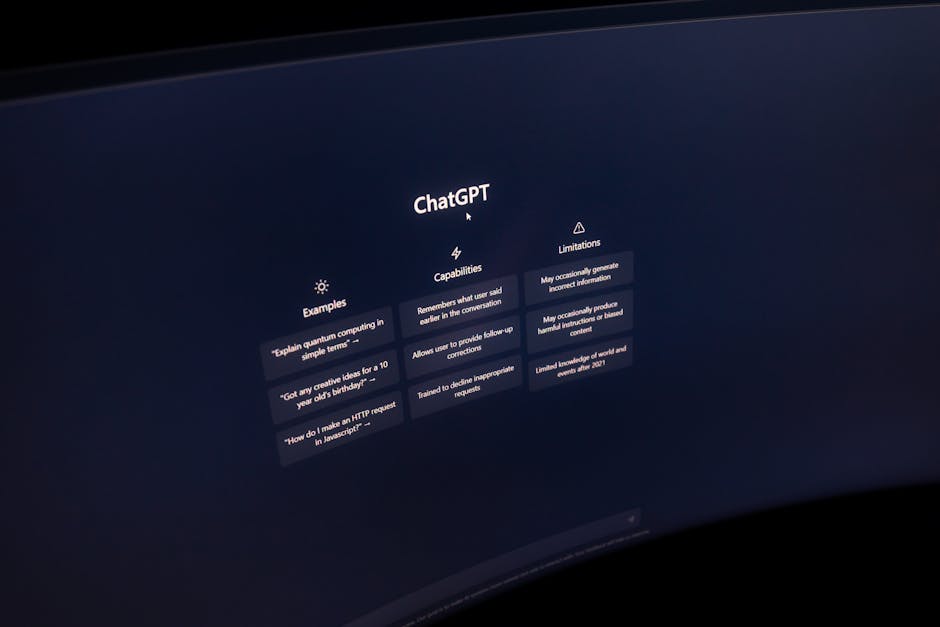
A successful AI Chatbot Development program therefore begins with a service outcome, not a model demonstration. The team must decide which customer journeys should be contained, which transactions require identity verification, what knowledge can safely be exposed, and when an agent handoff is mandatory. This framing prevents a common failure: launching a fluent assistant that performs well in a controlled demo but cannot resolve real requests because it lacks reliable knowledge, authenticated access to systems of record, or a defensible escalation path.
What AI Chatbot Development Actually Includes
At its core, an enterprise chatbot converts a user message into an appropriate, controlled action. A traditional NLU pipeline performs intent classification and entity extraction, then invokes a predefined dialogue or workflow. A generative assistant may instead use a large language model to interpret the request, select tools, and compose a response grounded in retrieved evidence. Most production platforms combine these approaches. Deterministic flows handle sensitive transactions, while generative components improve semantic search, answer synthesis, and flexibility around long-tail language.
The surrounding engineering is as important as the conversational model. Practitioners conduct intent discovery from transcripts, design a taxonomy, label representative utterances, curate the knowledge base, define escalation rules, and connect the bot to CRM, ticketing, order, identity, and payment systems. They also establish prompt operations, evaluation suites, red-team scenarios, release controls, and conversation quality assurance. Products from vendors such as Kore.ai and Cognigy provide orchestration capabilities, but the enterprise still owns the taxonomy, source content, policies, integrations, and acceptance criteria that determine whether the deployment works.
Beginners should distinguish a scripted bot from an AI assistant. Scripted experiences are suitable for narrow, predictable journeys but become brittle when users change topics or phrase requests unexpectedly. An AI assistant accommodates language variation and can retrieve information dynamically, yet it introduces uncertainty. The practical goal is not maximum generative freedom. It is the smallest amount of probabilistic behavior needed to improve resolution while keeping transaction logic, authorization, policy enforcement, and high-risk responses under explicit control.
Why Enterprise Programs Need a Clear Use-Case Strategy
AI Chatbot Development should start with a ranked use-case inventory. Review contact reasons, transcript volumes, average handling time, repeat-contact patterns, knowledge availability, and transaction complexity. High-volume requests with stable policies and accessible data are usually strong candidates. Password resets, order status, appointment changes, benefit explanations, and troubleshooting can all work, provided the assistant can authenticate the user and invoke the required systems. A popular intent is not automatically a good candidate if resolution depends on discretionary judgment or fragmented information.
Define success at the journey level. Containment rate shows how often a conversation ends without human assistance, but it can conceal abandonment or unresolved answers. Pair it with task-completion rate, fallback rate, repeat contact, customer effort, response groundedness, and escalation quality. Deflection rate is useful for channel economics, whereas containment is more useful for dialogue performance. Neither proves value alone. The program should connect improvements to avoided handling cost, reduced agent workload, shorter resolution time, or higher conversion while accounting for platform, inference, integration, and content-maintenance costs.
A simple prioritization model considers value, feasibility, and risk. Value includes volume and measurable customer impact. Feasibility includes source quality, integration readiness, identity requirements, and the availability of labeled conversations. Risk includes regulatory sensitivity, vulnerability to unsafe advice, and the consequence of an incorrect transaction. Starting with a moderately valuable but well-bounded journey often produces more learning than choosing the most visible use case. It lets the team establish governance and operating habits before exposing the assistant to complex decisions.
The AI Chatbot Development Lifecycle
Discover intents and design the taxonomy
Intent discovery begins with real transcripts, search logs, disposition codes, and agent notes. Cluster similar requests, then have conversation designers and domain specialists distinguish true intents from entities, workflow states, and knowledge questions. For example, “change my delivery address” is an intent, while the new address is an entity and shipment eligibility is a policy condition. A taxonomy that is too broad creates ambiguous routing; one that is too granular produces sparse training data and overlapping classes.
Utterance labeling should capture linguistic variety, misspellings, abbreviations, channel differences, and requests containing multiple intents. Establish annotation guidance and measure agreement between labelers. Reserve a representative test set before tuning. For each intent, document entry criteria, required entities, authentication level, fulfillment action, failure behavior, and handoff destination. This specification becomes a contract shared by NLU engineers, conversation designers, integration developers, and conversation quality assurance reviewers.
Design dialogue, escalation, and transaction controls
Conversation design maps the happy path as well as interruptions, corrections, missing information, unsupported requests, and recovery from tool failures. Ask only for information that the system cannot infer or retrieve safely. Confirm consequential actions before execution and avoid repeatedly requesting data already supplied. Consent capture and session authentication should be designed into the journey rather than bolted on after testing. Authentication state must also survive channel changes only where the security model explicitly permits it.
Agent handoff is a designed outcome, not evidence that the bot failed. Define triggers based on user preference, repeated fallback, sentiment, policy, failed verification, tool errors, and low confidence. Transfer the transcript, detected intent, extracted entities, authentication status, retrieved evidence, completed steps, and reason for escalation. Without conversation-context transfer, the customer repeats the story and the organization merely shifts work instead of reducing it. Human agents should also be able to correct classifications and flag deficient knowledge, creating structured feedback for remediation.
Building a Grounded Knowledge and Retrieval Layer
Enterprise answers are often inconsistent because policies live across portals, PDFs, ticket macros, product documentation, and departmental repositories. Before implementing RAG Chatbot Development, assign content owners, remove obsolete duplicates, identify authoritative sources, and attach access and jurisdiction metadata. Retrieval cannot compensate for contradictory source material. Knowledge-base curation is therefore a continuing product function with review dates, approval workflows, version history, and a clear process for urgent policy changes.
The ingestion pipeline parses documents, preserves headings and tables, divides content into semantically coherent chunks, generates vector embeddings, and writes those chunks and their metadata to an index. Chunk size and overlap should reflect the source structure rather than a universal token number. Semantic search can then retrieve passages related to a request, often combined with keyword search and metadata filters. A reranker may improve the ordering before selected passages are supplied to the model as evidence.
RAG Chatbot Development must be evaluated in stages. First measure whether the index contains the required evidence. Next test retrieval recall, precision, ranking, and permission filtering. Finally assess whether the generated response is supported by the retrieved passages. A low groundedness score may originate in missing content, poor chunking, weak retrieval, or a prompt that encourages unsupported completion. Treating every error as a model problem leads to expensive tuning while the real defect remains in the knowledge pipeline.
Hallucination Detection can combine claim-to-source comparison, citation validation, model-based evaluation, and deterministic checks for regulated facts. The assistant should decline or escalate when approved evidence is absent, conflicting, or below a defined confidence threshold. Teams should track hallucination rate by intent and source collection rather than reporting a single aggregate. That view reveals whether failures follow a particular policy set, content format, locale, or retrieval configuration.
Integrations, Safety, Testing, and Controlled Release
Conversational AI Development becomes operationally valuable when an assistant can do more than recite information. Use well-scoped APIs or tools to check an order, update a booking, open a case, or retrieve an account-specific result. Each tool needs an explicit schema, authorization checks, input validation, timeouts, idempotency where appropriate, and comprehensible error handling. Never rely on a language model to decide whether an authenticated user is entitled to access a record; enforce that decision in the identity and application layers.
Safety controls should treat user text, retrieved documents, and tool output as untrusted inputs. Red teams test prompt injection, jailbreaks, data-exfiltration attempts, role manipulation, unsafe advice, and requests to perform unauthorized actions. Guardrails can restrict topics, mask sensitive information, validate tool calls, screen outputs, and force escalation. The design should record which control intervened so reviewers can distinguish a legitimate block from an overly aggressive rule that damages the customer experience.
Build a regression suite from representative transcripts and known failure modes. It should test intent accuracy, entity extraction, retrieval quality, groundedness, policy compliance, tool selection, transaction outcomes, latency, and routing behavior. Include adversarial and multilingual cases where relevant. Because generative outputs vary, evaluation should use rubrics and thresholds rather than exact-string matching alone. Human review remains necessary for high-impact journeys, especially where a response can influence financial, health, employment, or legal decisions.
Release through development, test, pilot, and limited-production environments with versioned prompts, models, indexes, tools, and guardrail policies. A controlled release may expose a small percentage of traffic or a narrow intent set before expansion. Define rollback criteria in advance, including spikes in fallback rate, tool errors, unsafe-response findings, latency, or agent recontacts. This makes prompt development and model changes auditable instead of turning production into an uncontrolled experiment.
Measuring Production Quality and Improving the System
Once live, AI Chatbot Development becomes a continuous evaluation discipline. Model observability should connect each turn to the detected intent, retrieval results, evidence supplied to the model, prompt and model version, tool calls, safety decisions, latency, confidence, and final outcome. Dashboards need segmentation by intent, channel, locale, customer type, and release version. Aggregate averages can hide a severe failure in a small but regulated journey.
Transcript review is where metrics become actionable. Sample successful conversations as well as fallbacks and escalations, because nominally contained sessions may still contain wrong answers. Reviewers classify failure modes such as taxonomy gaps, entity errors, weak retrieval, stale knowledge, unsupported generation, integration failure, poor wording, and premature handoff. Each category should map to an owner and remediation path. The resulting examples are added to evaluation sets so a repaired defect cannot quietly return in a later release.
Production drift monitoring looks for changes in language, intent distribution, retrieval relevance, tool behavior, and answer quality. New products, seasonal events, policy changes, and channel migrations can all create model drift without any model update. Recalibration may require new utterances, taxonomy changes, revised chunks, altered confidence thresholds, or prompt adjustments. Monitor false escalation as well as unsafe containment; both can raise cost per interaction and erode trust.
In the last stage of governance, AI Content Detectors can help classify machine-generated material entering publishing or support workflows, but their confidence scores should not be treated as proof of authorship. Evaluate false-positive rate across languages, writing styles, document lengths, and editing levels. Use classification as one signal alongside provenance metadata, source history, and human review, particularly when an incorrect accusation could affect a customer, employee, student, or supplier.
Conclusion
Effective AI Chatbot Development combines disciplined use-case selection, curated knowledge, secure integrations, controlled generation, thoughtful escalation, and continuous evaluation. Begin with a bounded journey, define evidence-based acceptance criteria, test the complete path, and expand only after production data demonstrates reliable resolution. As conversational systems increasingly create and consume synthetic material, responsibly evaluated AI Content Detectors can complement provenance controls and human review, while the chatbot program remains focused on grounded answers, safe transactions, and measurable service outcomes.


Comments
Post a Comment